English
 Hindi
Hindi
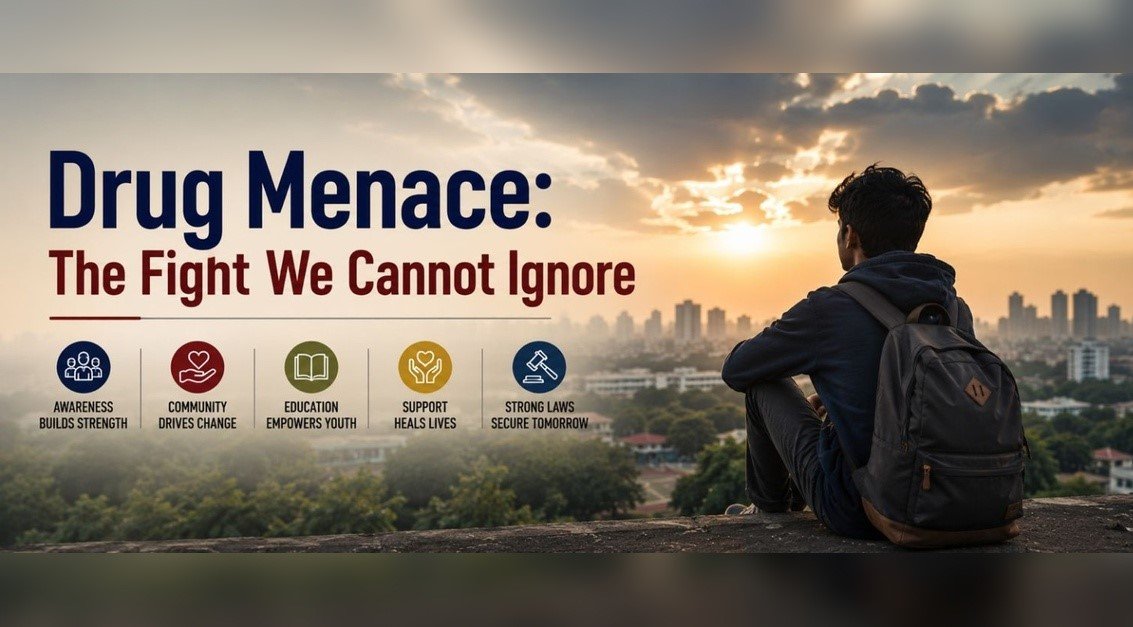
The Supreme Court of India expressed concern
over the rising drug abuse among youth recently, calling it a generational
threat. This concern emerged during a verdict supporting the National
Investigation Agency's (NIA) probe into a heroin smuggling case linked to
Pakistan. The Court emphasised the need for urgent collective action by
families, society, and state authorities to address the growing menace of drug
abuse.
Drug addiction is on the rise, with
approximately 100 million people in India affected by various narcotics,
according to the Narcotics Control Bureau (NCB) Report 2022. States like Uttar
Pradesh, Maharashtra, and Punjab recorded the highest number of FIRs under the
Narcotic Drugs and Psychotropic Substances (NDPS) Act between 2019 and 2021.
Northern India is sandwiched between two
major opium-producing regions of the world—the Golden Crescent and the Golden
Triangle. This geographical proximity is one of the major reasons behind the
increasing abuse of opioids in the region.
The Golden Crescent, comprising Afghanistan,
Iran, and Pakistan, had been the primary hub for opium production before the
2022 ban on opium cultivation in Afghanistan. It has significantly impacted
Indian states such as Jammu & Kashmir, Punjab, Himachal Pradesh, Rajasthan,
and Gujarat.
Located at the intersection of Laos, Myanmar,
and Thailand, the Golden Triangle is another region notorious for heroin
production, with Myanmar currently being one of the world's largest heroin
producers. Trafficking routes pass through Laos, Vietnam, Thailand, and India.
Among the factors contributing to drug abuse
in India are proximity to these regions, peer influence, and the desire to fit
in with friends and gain social acceptance, especially in schools and colleges.
Academic pressure, intense competition, stress, anxiety, and depression also
drive some youth towards drugs as a coping mechanism. The glamorisation of drug
use in media, movies, and music often normalises substance abuse, making it
appear trendy and acceptable. Poverty, unemployment, and limited access to
educational and recreational opportunities further increase the risk, while
dysfunctional family environments, parental substance abuse, and lack of
emotional support also contribute. A supportive family environment, however, can
greatly reduce these risks.
Easy availability of drugs, particularly due
to smuggling in Punjab, has led to widespread abuse. Around 15.4% of Punjab's
population uses narcotics, with over 3 million people affected, according to a
2022 study by the Post Graduate Institute of Medical Education and Research
(PGIMER).
Better implementation of the NDPS Act and the
Prevention of Illicit Traffic in Narcotic Drugs and Psychotropic Substances
(PITNDPS) Act through improved training, adequate resources, and modern
technology can go a long way in tackling this menace.
The NDPS Act also needs to be revisited to
integrate rehabilitation alongside punitive measures while strengthening
enforcement and improving coordination among local, state, and central
authorities. The government should develop integrated policies that address the
root causes of drug abuse by involving the health, education, and social
welfare sectors. Schools should include drug education in their curriculum to
help students understand the risks and consequences of substance abuse from an
early age.
Civil society and religious leaders can play
a significant role by organising awareness programmes in schools and
communities, promoting healthy lifestyles, and encouraging role models such as
athletes and actors. Article 47 of the Constitution calls for improving public
health and prohibiting harmful substances. To effectively address the drug
menace, India needs stronger regulations, better coordination among states, and
a comprehensive policy focused on prevention, rehabilitation, awareness, and
strict enforcement.