English
 Hindi
Hindi

In recent years, the perception of spirituality's role in
mental health has shifted dramatically. Once viewed with skepticism within
psychiatric communities, spirituality is now acknowledged as a significant
factor in mental well-being.
Spirituality can be understood as a deeply personal
experience that provides individuals with a sense of purpose, connectedness,
and fulfilment. It includes beliefs that extend beyond oneself, connecting
people to a larger universe or higher power. This unique experience fosters
qualities such as love, compassion, and tolerance, contributing significantly
to mental and emotional well-being.
Engaging in spiritual practices is associated with lower
levels of anxiety, depression, and substance use, contributing to overall psychological
well-being. Spirituality provides a sense of purpose and connectedness,
enhancing self-esteem and offering hope during difficult times. Additionally,
individuals often report that their spiritual beliefs help them navigate stress
effectively, resulting in improved emotional regulation and a sense of inner
peace.
Spirituality is a universal concept that transcends
cultural boundaries, providing individuals with a means to seek meaning and
purpose in their lives. Various cultures express spirituality in unique ways,
demonstrating its adaptability and relevance across different societies. This
broad applicability highlights its significance as a legitimate psychological
construct, distinct from organised religion.
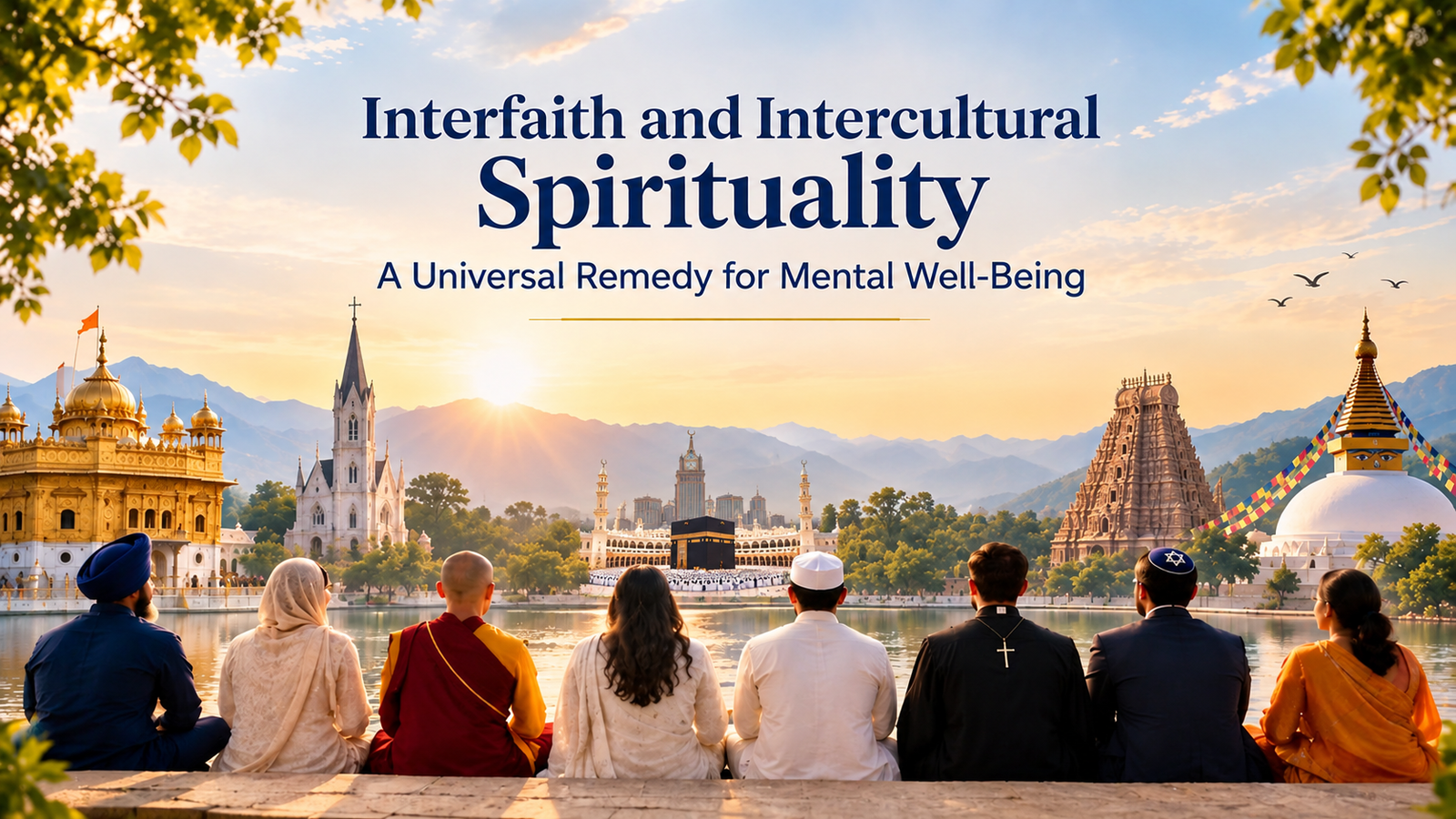
Interfaith
spirituality improves mental well-being by providing shared frameworks of
purpose, community support, and meditative practices that transcend single
religious traditions.
Core Benefits
of Interfaith Spirituality include:
Universal
Purpose: Drawing from multiple wisdom traditions helps individuals find deeper
meaning, reducing existential anxiety and depression.
Shared
Community: Intercultural and interfaith gatherings foster a strong sense of
belonging, which directly combats loneliness and isolation.
Contemplative
Practices: Universal tools like mindfulness, silent reflection, and gratitude practicing
lower stress hormones and regulate emotional responses.
Resilience and
Hope: Viewing life challenges through a broader universal lens encourages
acceptance and psychological flexibility during crises.
Practical Ways
to Practice
Mindful
Reflection: Spend a few quiet minutes daily in silent meditation or journaling
without strict dogmatic rules.
Interfaith
Dialogue: Join community circles that discuss shared human values like
compassion, peace, and service.
Nature
Connection: View the natural world as a unifying spiritual anchor to ground
racing thoughts and reduce stress.
In today’s fast-paced world, mental health issues are
rising due to lifestyle changes, social media use, workplace burnout, and
geopolitical events. Despite the urgent need to address the concern, mental
health remains stigmatised, inaccessible, and undertreated. Contemporary mental
health focuses more on symptoms rather than overall mental well-being. The
holistic nature of ancient Indian mental health concepts and paradigms includes
elements that contemporary mental health literature has overlooked. Indian
texts like the Vedas, Upanishads, Bhagavad Gita, and Ayurveda make significant
mention of mental health and provide applications of the psychological remedies
to real-world circumstances.
A state of mental well-being is characterised by an
individual’s ability to manage everyday stressors, work efficiently, reach
their full potential, and give back to their community. According to WHO (World
Health Organization (WHO), 2014), it encompasses emotional equilibrium,
resilience in the face of adversity, life satisfaction, and a sense of purpose.
Spirituality in Hinduism
Ancient Indian traditions offer a holistic approach to mental
health that integrates physical, mental, and spiritual well-being. The Vedas,
Upanishads, Bhagavad Gita, and Ayurveda are a few examples of ancient texts
that offer advice on living a balanced life, fostering mental peace, and
dealing with psychological problems. The Atharva Veda, for instance, talks
about the calming effects of chants and healing sounds, which are now
comparable to modern sound therapy and mindfulness-based stress reduction
(MBSR) methods (Sharma, 2021).
Hindu religious scriptures help maintain mental health by
providing cognitive frameworks, emotional regulation techniques, and
mindfulness practices that promote equanimity and stress reduction.
The Vedas, Upanishads, and Bhagwad Gita consists of a lot
of practical solution for leading a stress-free life. The Bhagwad Gita states.
तस्मादपरिहार्येऽर्थेनत्वंशोचितुमर्हसि ।।
"Do not worry about the things that are
inevitable" When we can't control the inevitable things, the wrong about
them just makes us stressed having no solution in hand. Performing the above
philosophy is another statement from the Ramacharitmanas, which says that
होईहि सोइजो रामचिराखा। कोकरितर्कबढ़ावैसाखा ॥
This means that the particulars of the life of a person
and the events are decided by Rama and are not liable to change.
A normal disturbed mind anticipates the negative outcome
of an ongoing or futuristic event and starts getting stressed. The expectation
of the scriptures from an individual in the ancient Indian traditions is to be
even-minded and cool in any event of life whether it is pleasant or unpleasant.
The Shrimad Bhagwad Gita which is considered the voice of Shri Krishna also
emphasises an even mind.
समः शत्रौचमित्रेचतथामानापमानयोः ।
शीतोष्णसुखदुःखेषुसमः सङ्गविवर्जितः || 18||
Shri Krishna says that the balanced mind which can be
attained by a higher level of consciousness and continuous practice of
meditation can reach me i.e. the supreme soul who is dear to me, the nature of
those even-minded people is equal to friends and foes, honour and dishonour,
summer and winter, happiness and sorrow, alone and in group. The gist of all
the analysis is that the rat race of life can never be won, the more contented
the mind is, the more peaceful it is. The proverb in Hindi also says the same.
"संतोषी सदा सुखी"
"A balanced life is for soliciting solutions for the
root cause of stress in life, according to the directions of the scriptures.
Yoga plays an important role in stress management. To
start with, we should understand what is yoga? Yoga in Sanskrit means which relaxes the mind and body and brings them in
synchronisation which in turn leads to a balanced life.
"सिद्मा असिद्योसमोमूला
'समलम्योगमउच्चते"
The one who is equal and balanced with an even state of
mind in both accomplishment and debacle is the bona-fide yoga practitioner.
The Bhagavad
Gita provides an ancient psychotherapeutic framework that treats the wandering
or distressed mind through cognitive restructuring, mindfulness, and
equanimity.
Core Spiritual
Principles for Mental Health in the Bhagavad Gita emphasise:
Nishkama Karma
(Detached Action): Focus fully on your effort and duty while releasing anxiety
and attachment to the final outcome.
Samatva
(Equanimity): Maintain emotional stability and inner balance regardless of
success or failure, praise or criticism.
Titiksha
(Patient Endurance): Tolerate fleeting emotional distress and passing mental
storms (like seasons) without resorting to suppression or avoidance.
Mind
Management: Recognise through Chapter 6 that the untrained mind acts as an
enemy, while a disciplined mind serves as a faithful friend.
Cognitive
Behavioral Therapy (CBT): Lord Krishna acts as a guide who reframes Arjuna’s
cognitive distortions, similar to modern therapeutic interventions.
Mindfulness:
Practicing detached observation of thoughts helps calm the nervous system and
build resilience against chronic stress and depression.
Mental health practices in the Upanishads majorly focus
on controlling emotions and impulses, indicating strategies for controlling
emotional reactions (Gautam, 1999). Gita majorly emphasises cognitive
restructuring, which is modifying one’s mental state by altering one’s thought
patterns, as illustrated in “Sankhya Yoga” in chapter 2 of Bhagavad Gita. Lord
Krishna’s cognitive restructuring of Arjuna through the Yoga of Jnana, Bhakti,
and Karma offers a comprehensive framework that promotes psychological conflict
resolution (Rao, 2009). Ayurvedic literature provides detailed explanations of
the manas (mind), Mental faculties (causative factors) like “Shoka” and
“Krodh,” causes, cures, and prevention of Manasa vyadhi (mental illness), with
a focus on mental health (Khayamali et al., 2024).
The ageless wisdom found in Indian scriptures is becoming
more and more applicable to contemporary mental health procedures. A thorough,
all-encompassing approach to mental health and emotional resilience is provided
by these ageless self-help techniques from Indian texts, which are backed by
both traditional knowledge and contemporary studies. Evidence for the benefits
of Vedic mantras, practices of Upanishads, techniques in Bhagavad Gita, and
ayurvedic remedies on anxiety, stress, depression, and cognitive function
suggests that they could be used in addition to other treatments to improve
mental health.
Ayurveda uses physical treatments to support these mental
practices. By removing toxins that harm both physical and mental health,
panchakarma, a detoxification treatment, promotes mental and emotional
well-being [Charaka Samhita, Sutrasthana 11.3 (Srikantha Murthy, 2001)].
According to recent research on adaptogenic herbs, rasayana herbs like Brahmi,
ashwagandha, and jatamansi are well known for improving memory, lowering
stress, and boosting cognitive function [Charaka Samhita, Sutrasthana 24.52
(Srikantha Murthy, 2001; Singh et al., 2011)]. With the use of Ashwagandha
significant drops in anxiety and depression scores in adults were observed.
Spirituality in Sikhism
The holy scripture of the Sikhs the Guru
Granth Sahib contains devotional hymns from diverse religious sources. It
enshrines the divine hymns of 6 Sikh Gurus. In addition it includes sacred
writings of 6 Muslims Sufi Saints and 24 Hindu Bhagat and Bhatts. It is an
epitome of interfaith scripture for divine realisation.
ਸਰਬ ਧਰਮ ਮਹਿ ਸ੍ਰੇਸਟ ਧਰਮੁ ॥
ਹਰਿ ਕੋ ਨਾਮੁ ਜਪਿ ਨਿਰਮਲ ਕਰਮੁ ॥
There is no need to be anxious as whatever
happens has been occurring since ages. In this world nothing is stable or
permanent.
(SGGS, Ang
266)
ਹੁਕਮਿ ਰਜਾਈ ਚਲਣਾ ਨਾਨਕ ਲਿਖਿਆ ਨਾਲਿ ॥੧॥
O Nanak! It is written that you shall obey
the Hukam of His Command, and walk in the Way of His Will.
(SGGS, Ang 1)
Meaning living
the will of God. Our anxieties, worries and stress come from how we react to
the situation. The more we resist, deny the facts of the situation, the more
pain and suffering we face. This understanding helps us to remain calm, steady
and positive. This does not mean that we should not make efforts to fix the
situation.
Another
foundational verse on spirituality and mental wellness by Guru Nanak, found on Ang
274 of the Guru Granth Sahib, states:
ਸਰਬ ਰੋਗ ਕਾ ਅਉਖਦੁ ਨਾਮੁ ॥
ਕਲਿਆਣ ਰੂਪ ਮੰਗਲ ਗੁਣ ਗਾਮ ॥
The Naam is the panacea, the remedy to cure
all ills.
Singing
the Glory of God is the embodiment of bliss and emancipation.
This verse emphasises that spiritual wisdom and divine
virtues are the true cure for the psychological suffering, anxiety, and stress
that afflict the mind.
Guru Nanak
says:
ਚਿੰਤਾ ਤਾ ਕੀ ਕੀਜੀਐ ਜੋ
ਅਨਹੋਨੀ ਹੋਇ ॥
ਇਹੁ ਮਾਰਗੁ ਸੰਸਾਰ ਕੋ ਨਾਨਕ ਥਿਰੁ ਨਹੀ ਕੋਇ ॥
People become anxious when something
unexpected happens.
This is the way of the world, O Nanak;
nothing is stable or permanent.
(SGGS, Ang 1429)
The only way to find calm is to recite the Name of God.
ਸੁਖਮਨੀ ਸੁਖ ਅੰਮ੍ਰਿਤ ਪ੍ਰਭ
ਨਾਮੁ ॥
ਭਗਤ ਜਨਾ ਕੈ ਮਨਿ ਬਿਸ੍ਰਾਮ ॥
The Peace giving jewel is the ambrosial Name of God.
In it the devotees mind find peace.
(SGGS, Ang 262)
To integrate these teachings for mental wellness, Sikhs
often practice the following:
·
Shabad Kirtan:
Listening to or singing spiritual hymns alone or in a congregation (Sangat).
·
Naam Japna/Simran:
Meditative chanting or quiet contemplation of God's name to calm the subconscious
mind.
·
Living in Hukam:
Cultivating contentment and surrendering to the Divine Will to accept life's
circumstances.
It is to be
remembered that the spiritual guiding principles enshrined in Sri Guru Granth
Sahib (SGGS) (Sikh Scriptures) address human consciousness, not the physical
body. Having stated that, medical science tells us that those who enjoy peace,
happiness and bliss in life and are mentally healthy and face fewer physical
diseases and recover quicker.
Spirituality in
Christianity
The soul has been defined by a number of Christian leaders,
including Dr. Lester Sumrall and Dr. Oral Roberts, as the mind, the will and
the emotions. When we really understand the teaching of spirit, soul and body,
we will come to the realisation that Christian faith supports mental health.
Experiencing a mental illness does not mean that someone is
spiritually immature or that they are living a punishment for their actions or
that they do not pray enough. Even in the Bible, we can see the struggle with
mental health issues. For example, many people believe that the prophet Elijah
may have battled with depression in 1 Kings 19:4-14. There are also other
figures who are believed to have suffered from mental illness, including David
and Jonah.
A recent Lifeway Research study found that 26% of U.S. protestant
pastors struggle with a mental illness personally. Even faith leaders are not
immune from mental health problems. This helps show that mental illness is not
a reflection of the person or their actions. Rather, just a reminder of the
state of the imperfect world we live in.
“There is a friend who sticks closer than a brother,” (Proverbs
18:24). Even when we are at our loneliest and feel we have hit rock bottom
emotionally, God has not abandoned us.
He is with us each and every day. Mental illness can make us feel
lonely and isolated. However, even when our emotions are strong and the
loneliness feels at its worst, we are not alone.
If you are struggling with a mental illness, remember there is hope
and help. There are mental health professionals who are equipped with tools to
help reduce the symptoms of mental illness as well as help connect you with
resources that can benefit you.
There are many Bible verses that support mental strength and
health: including, Isaiah 53:4-5 and I Peter 2:24-25. When we truly understand
what the Bible teaches about salvation, we will understand that a healthy soul
is necessary for a healthy life as a believer. In other words, to be truly
healthy as believers we must have a sound mind as well as to be forgiven for
our sins.
There are difficulties in the world because of sin and satan. Yet
we, as believers, should not let the problems of the world overwhelm us. Jesus
said, In the world you shall have tribulation (trouble), but be of good cheer
for I have overcome the world (John 16:33). James says that we can count it all
joy when we fall into different kinds of trouble (James 1:2). We are not immune
to trouble and problems as believers, but we can overcome them by faith.
Isaiah 26:3 says that God will keep us in perfect peace when our
minds are fixed on Him. This does not mean that there are no problems; but it
does indicate that God’s promises give us the ability to overcome the problems
as we believe in Him.
Jesus said, “In your patience, possess your souls” (Luke 21:19). As
believers we need to possess our souls. We need to take authority in the realm
of our thought life and our emotions. We need to let our spirit and the
promises of God determine the outcome of things rather than letting our
emotions run wild.
Spirituality in Islam
Islamic
spirituality fosters mental well-being by connecting the heart and mind to the
Divine, providing emotional grounding, purpose, and healthy coping mechanisms.
Core Spiritual
Practices of Islam emphasise:
Salah (Prayer):
Performing the five daily prayers creates a physical and mental routine that
breaks up stress, acts as a form of active mindfulness, and calms the nervous
system.
Dhikr
(Remembrance of God): Repeating phrases of praise helps regulate emotions,
lowers stress markers, and brings inner peace to the heart.
Du'a
(Supplication): Voicing personal worries directly to God reduces feelings of
isolation and builds a deep sense of emotional support.
Qur'an Recitation:
Listening to or reading verses provides a meditative rhythm that actively
lowers anxiety.
Foundational
Mindsets
Sabr
(Patience): Reframes trials and hardships as temporary tests of growth rather
than punishments, building psychological resilience.
Tawakkul
(Reliance on God): Encourages doing one's best while surrendering the final
outcome to a higher power, which lifts the heavy burden of chronic worry.
Shukr
(Gratitude): Focuses the mind on blessings, shifting emotional perspectives
away from despair.
Integration
With Professional Care
Holistic
Balance: Islamic traditions view mental health as deeply linked to physical,
emotional, and spiritual harmony.
Seeking
Treatment: Islam fully supports combining spiritual routines with professional
medical help, counselling, and modern therapy when facing mental illness.
Spirituality in Buddhism
The spiritual
core of Buddhism centers on awakening from illusion, ending personal suffering,
and realising inner peace through direct personal experience.
Core Spiritual
Teachings of Buddhism ordain to acknowledge that life involves suffering, trace
its root to craving and ignorance.
Interdependence
(Pratītyasamutpāda): Teaches that all things are deeply connected,
dissolving the illusion of a permanent, isolated self (Anattā).
Key Spiritual
Practices
Mindfulness (Sati):
Cultivates a clear, non-judgmental awareness of the present moment to break
automatic emotional reactions.
Meditation (Bhavana):
Calms the mind and develops deep insight into the impermanent nature of
reality.
Five Spiritual
Faculties (Indriya): Balances faith, energy, mindfulness, concentration,
and wisdom to overcome greed, hatred, and delusion.
Compassion (Karuṇā):
Fosters universal kindness and altruistic love for all living beings.
Conclusion
Interfaith is dialogue between people belonging to different faiths, sharing and coordination between them. Religion is a ladder to reach the goal of spirituality spiritually comprises human values as compassion, empathy, forgiveness, truthfulness, forbearance and gratitude. The highest value constitutes the remembrance and recitation of the name of the Almighty God. Interfaith discussions and exchange of ideas can support peaceful existence, human flourishing and collective action.